Looking like every other medspa
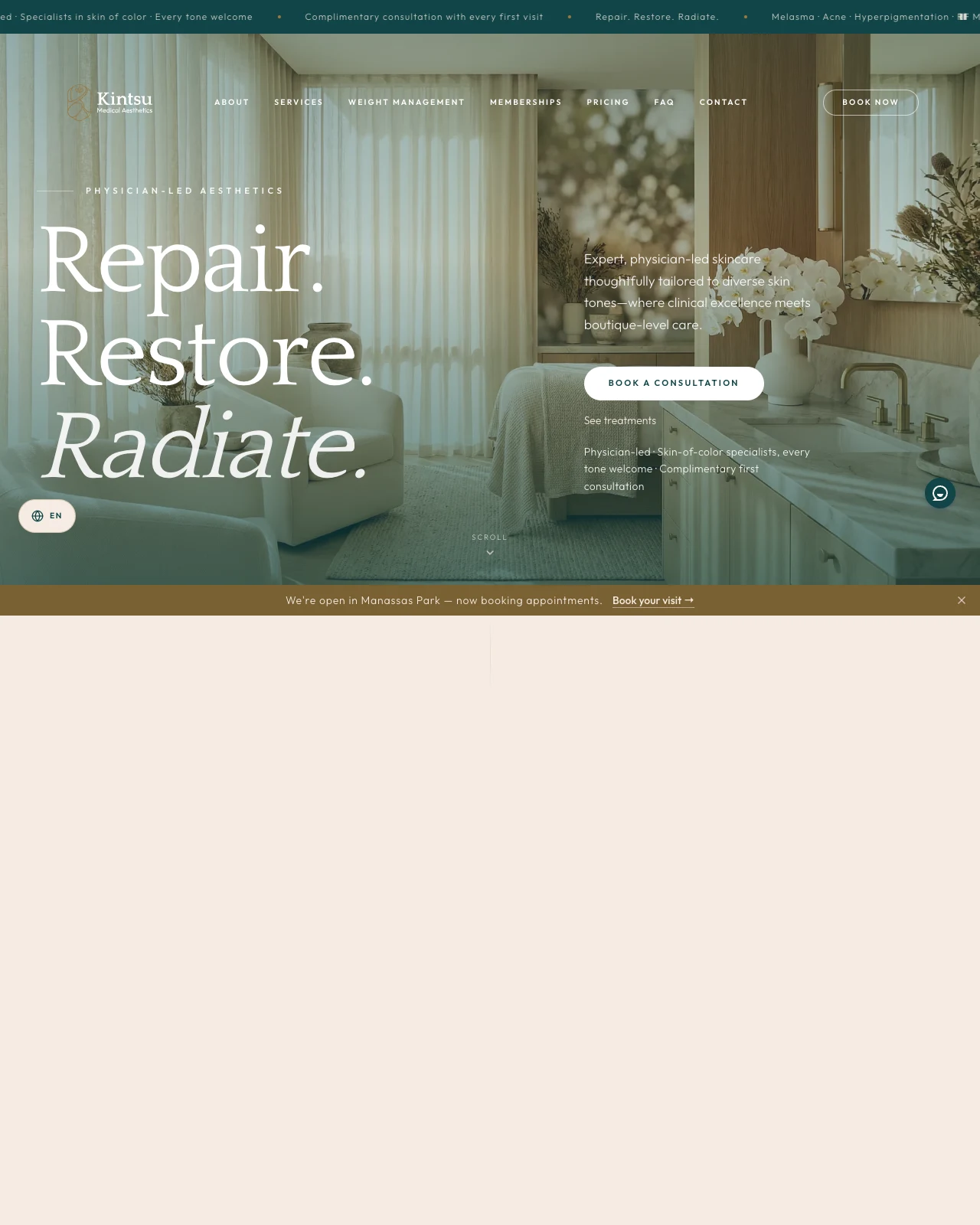
Kintsu wanted to feel medical and welcoming to patients with deeper skin tones, in a market full of pastel, interchangeable medspa branding. A logo on its own couldn't solve that.
The owner needed a standard for words, colors, images, and every page built later. Without one, each new page turns into a fresh argument about taste.
What the owner chose to standardize
The owner had two paths. She could buy a logo and a color palette and decide the rest page by page, or she could pay for written rules plus a review step that slows some work down.
She chose the written rules. That's why a July review could name four brand violations in plain terms instead of leaving everyone to argue about taste.
Five parts a small team can actually use
Five layers, top to bottom
A brand that still sounds like you after a busy week
Each layer holds the one below it. The last one is a person, and we draw it open rather than pretend otherwise.
- Layer oneThe story it all comes from
The name comes from kintsugi, repairing broken pottery with gold. That gave Kintsu the line “Repair. Restore. Radiate.” and seven values, including “Physician presence, not physician cover”.
- Layer twoThe voice, with teeth
Five rules, each written as what the voice is and what it is not, plus one banned-word list that the same three brand documents all point at. Social posts are checked against it before they go out.
- Layer threeColors and type, built in
Nine named colors led by teal, cream and antique gold, and two typefaces. On April 29, 2026 they went into the site itself, so no page can reach for an off-brand color.
- Layer fourThe file the software reads
A short brand file that the coding software reads before it builds a page, so the rules arrive with the work rather than in a document nobody opens.
- Layer fiveA person at the end
Nothing checks the wording of a page on its own yet. A person still reads it, and until that changes we say so rather than imply the whole stack is automatic.
The one layer still held open by hand
A new hire, a stand-in writer or a rushed Friday cannot move your brand somewhere you never agreed to go.
The system has five parts, and each one exists so somebody can answer a question without calling us.
- A story. The name draws on kintsugi, the Japanese art of repairing pottery with gold. That gave the practice "Repair. Restore. Radiate." and seven values, including "Physician presence, not physician cover."
- Colors and type. Nine named colors and two typefaces went into the website on April 29, 2026.
- Voice rules. Five rules describe what Kintsu sounds like and what it avoids, backed by one shared banned-word list.
- Guidance for builders. A short file tells the people and the software making pages which brand pieces they may use.
- A review loop. A person still reads page wording before it goes live.
The result isn't that every page looks the same. It's that a future page has a standard to meet.
In their words
Kintsu's physician-owner, on the brand:
"Simple Cortex understood our vision and helped us create a concrete brand that stays true to who we want to be and what kintsugi means to us."
Why gold is never a button
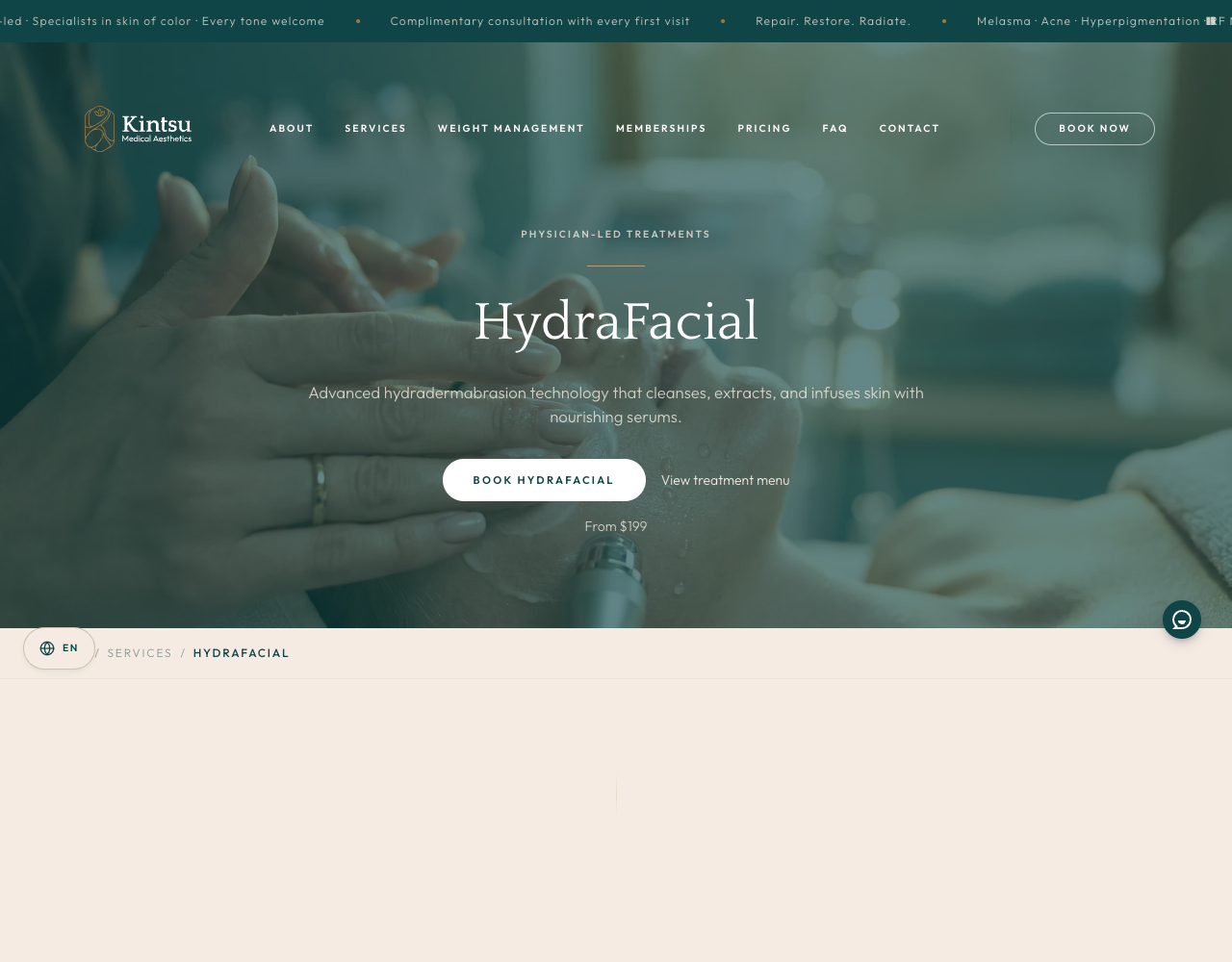
The visual direction had to do two jobs: feel distinctive, and help patients trust a physician-led practice. Gold became the connective accent. Teal became the action color. That one rule keeps a decorative brand color from competing with the button a visitor needs to find.
We also used a competitor test. If a page could appear unchanged on another medspa's website, it wasn't specific enough to Kintsu.
What the review caught
Rules only work if somebody checks the work against them. Two reviews did that: 11 pages on June 20, 2026, and 10 routes again on July 3.
Two reviews, one fix list
We read your site back to you before a patient does
Two reviews, three weeks apart, and everything they found in one list with a state against it.
Step one
Read it as a buyer would
On June 20, 2026 we read 11 pages on a phone and on a desktop as three different kinds of buyer. The biggest finding was that no before-and-after proof on skin of color existed anywhere on the site.
Step two
Read it against your own rules
On July 3, 2026 we read 10 pages back against the brand rules rather than against taste, and found four places where the live site was breaking rules we had written ourselves.
Step three
One list, with a state on every line
Quick wins where people land, wording fixed across the pages, and real patient photographs taken with consent. The photographs wait on a photo shoot, not on more building.
Built, not yet live
You find out what is wrong with your own site from us, in writing, with the awkward items still on the list.
The photographs are the only item waiting on something other than more building.
- Five testimonials that weren't real. A test build carried five patient reviews dated before the practice had patients. Our own July 3 review caught them, and they were gone within 24 hours. On a medical practice's site, invented praise is a trust problem the owner would have had to answer for. Page wording is now read back against the brand rules before it ships. A second invented quote and an unsupported device claim came out in the same sweep.
- Gold used as a button. The live site was breaking four rules we had written ourselves, including gold used as an action color. The July brand review found them. It meant the eye had to compete for the button that leads to booking. All four were fixed the same day.
- No proof on deeper skin tones. The June review found no before-and-after images of Fitzpatrick III to VI skin, the medium-to-deep skin tones most skin tools handle badly, anywhere on the site. Reading the site as three kinds of buyer surfaced it. For the patients Kintsu is built for, that's the one piece of evidence they came looking for. The fix is a consented patient photo shoot, which waits on the practice rather than on more building.
- Fixes that aren't confirmed live. The July fixes are built, but we haven't yet confirmed them on the public site. We caught the gap when we checked our own records. Calling them live would overstate what a visitor sees today, so we report them as built until the live site says otherwise.
What we can prove today
- Delivery fact. Nine named colors and two typefaces, built into the website on April 29, 2026.
- Delivery fact. Seven values and five voice rules, backed by one shared banned-word list.
- Delivery fact. Eleven pages reviewed on June 20, 2026, and ten routes reviewed again on July 3.
- Observed. Five fabricated testimonials caught in testing and removed within 24 hours.
- Observed. Four brand-rule violations found on the live site, including gold used as a button.
The first scorecard, due December 2026, measures site conversion rate and Google review growth.
Is this a fit?
This is useful if your site, social posts, and printed materials feel like they came from different businesses, or if a growing team keeps making brand decisions from memory.
It isn't the right first project if your urgent problem is missed calls, manual follow-up, or a broken booking path. Start with that problem instead. This work pays off when you can hold a review step in the schedule.